Wednesday

WHO THEN IS ME?

Our body consists of 100 trillion bacteria and micro organisms.

And all of these 100 trillion microbes have their own biological genetic code or DNA.

Even "I" have my own DNA. So, who then is "ME"

Am "I" the individual called Vishnu, or am "I" the cumulative of these 100 trillion microbes? 

Or am "I" just one amongst these infinite creatures in the biological boundary called "my body"

Or what if "my body" is just a piece of the Earth wherein trillions of life coexist together?

So does the individuality of one creature in this body called "Vishnu" fade into oblivion?


Saturday

HIGHWAY INTERCHANGES AROUND THE WORLD

I have compiled a list of some of the most fascinating interchanges around the world. Interchanges are the most interesting part in a freeway/highway system that provides effortless intersection of several differently headed vehicular traffic. This ensures no signals, no pedestrian crossings and no traffic jams! Here is a look into some of the most complex interchanges around the world.

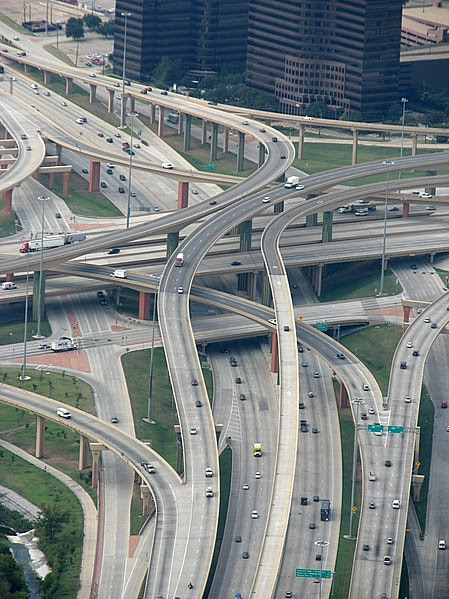
TEXAS, USA: ONE OF THE LARGEST INTERCHANGES IN THE WORLD
File:High Five.jpg


RIDDERKERK, THE NETHERLANDS
File:Ridderkerk interchange.jpg


PUXI, SHANGHAI
File:Viaduct in Puxi, Shanghai.jpg

HOUSTAN, USA


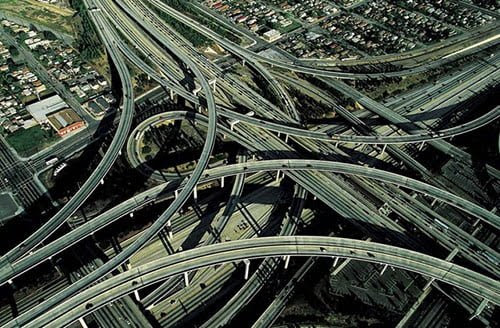
CALIFORNIA, USA


BIRMINGHAM, UK
GravellyHillInterchange in Awesome Pictures of Crazy Intersections and Interchanges


CMJ, NEW ZEALAND
CentralMotorwayJunctionNewZealand in Awesome Pictures of Crazy Intersections and Interchanges

LOS ANGELES, USA
HarryPregersonInterchange in Awesome Pictures of Crazy Intersections and Interchanges

DUBAI, UAE

JAPAN

KATHIPARA, CHENNAI: ASIA'S LARGEST CLOVERLEAF INTERCHANGE


SHANGHAI, CHINA
BridgeInterchangeChina in Awesome Pictures of Crazy Intersections and Interchanges

Friday

FIRST IMAGE OF EARTH FROM ISRO'S MANGALYAAN

Mangalyaan is now orbitting Earth at an apogee(farthest distance from Earth) of 1.92 lakh kilometers. ISRO engineers have successfully imparted 5 orbit raising maneuvers to the spacecraft. With each burn, the orbit is further raised, until enough velocity is gained to break away from Earth's gravitational influence.

The tedious and time consuming orbital raising burns could have been avoided if ISRO had a bigger rocket at its disposal. GSLV(Geo Synchronous Satellite Launch Vehicle) could have been the ideal one, which is more bigger and powerful as compared to the presently used PSLV. But ISRO is still sorting out issues with experimentation of its indigenously built cryogenic engine. Hence they avoided GSLV for Mangalyaan mission. GSLV could have directly blasted Mangalyaan to a very high altitude orbit and thus allowing it to easily break away from the gravitational sphere of Earth. A section of ISRO's engineers are already working on it. GSLV will be used for Chandrayaan II mission, which will have a Lander and Rover on moon. GSLV may also prove to be the launch vehicle for ISRO's most ambitious mission to the Sun, called Adithya. It will be studying the Sun's corona and I can't repress my excitement that this mission will be offering all of us.

Turning our attention back to Mangalyaan, while on its long journey towards Mars, ISRO engineers decided to point the Colour Camera on the spacecraft towards Earth to take a picture of the Indian subcontinent, the birthplace of Mangalyaan.

It resulted in an amazing image of our planet taken from 67975 km on November 19, 2013. The picture was taken at 1:50 pm IST. In this image, each pixel on your screen is equivalent to 3.53 km on the ground.

The image was taken during testing of the components on board Mars Orbiter spacecraft. The spacecraft is now orbiting in deep space.

The image is a testimony to our nation's hard working ISRO team. Just imagine the pride and happiness that the scientists and engineers feel when their baby is in deep space and it looks back to give a salute to the men who made it possible.

One important thing to note is that the image has been taken from a height of 67945 km, which is similar to the altitude at which Mangalyaan will be orbiting Mars. So the clarity of this image offer clues to what we can expect from photos of Mars when we reach there. We can rest assured that it will be an amazing moment.

Meanwhile, NASA has launched MAVEN(Mars Atmosphere and Volatile EvolutioN) on November 18, an expensive and more advanced probe to Mars which will be giving company to Mangalyaan on its long journey to the red planet. MAVEN will also reach Mars at approximately the same time that Mangalyaan will be reaching. ISRO spokesperson has also claimed that NASA and ISRO will be sharing data and thereby assisting each other in their dedicated missions. The next big date for ISRO will be December 1, when they will be firing the 440 Newton engine to give Mangalyaan a final push to leave the Earth and embark on it 300 day journey to Mars covering a whopping distance of 40 Crore kilometers.

Now have a look at this stunning image of your place on Earth from 67,975 km from the eyes of Mangalyaan. Notice the clouds and its shadow on the ocean below it. We can also observe that the Sun has moved to the left of India from the reflection of it in the ocean, indicating that noon time in India has passed. The sun passes from east towards west. Remember, the photo was taken at 1:50pm IST, which is 110 minutes past the local noon time.

And for more interested readers, you can view a detailed interview of ISRO Chairman K Radhakrishnan, an inspirational role model, giving us tonnes of information regarding this mission.


Monday

A MIRACULOUS MEETING OF SCIENCE AND RELIGION

Science and Religion are often at crossroads with each other. People often say that those are two subjects that will never really unite. But miraculously, a NASA provided image opens speculation of something extremely unique. Today, I bring to you the story of that coincidence. 

Is religion and science different? Or are they fundamentally the same? I always feel the latter is more true. A religious spiritual seeker and a scientific seeker are not two different entities, they are merely two forms of the same eternal quest that man is subjected to. A scientific seeker will search for answers to the very source of his questions, in the outer existence of nature. Whereas, a religious spiritual seeker will search for answers to the very source of his questions, in the inner realms of his consciousness. One look outwards, another look inwards, but they are ultimately travelling in the same boat in the same direction. 
Away from all the insignificant brawl between Science and God, I would today like to tell you a story. A story not many may believe in, but it is beautifully giving wings to an amazing possibility, an opportunity to believe that Science and God do not contradict, but they amazingly coexist.

July the 23rd, 1999. NASA made history by launching one of its greatest observatories ever, called The Chandra X-ray Observatory, named after Nobel Prize winning Indian-American astrophysicist Subrahmanyan Chandrasekhar. That launch was the beginning of a legacy of deep space X-ray astronomy. Out of the 25 landmark photographs and findings captured by Chandra X-ray observatory, I today bring to you the most miraculous one ever. NASA scientist gave it the quintessential name, “THE COSMIC HAND OF GOD”.


On April 3, 2009, NASA released a Chandra Observatory taken image of a rapidly spinning neutron star, 20 km in diameter, emitting exorbitant amounts of X-rays into an area spanning 150 light years around it. The pulsar, as it is called, is located at a distance of 17,000 light years away from our planet. After a quick search in the extremely huge NASA public archives, I grabbed the image of B1509, as this pulsar came to be known. X-rays, which are not in the visible spectrum, cannot be seen by human eyes. Hence, the scientists gave a random colour coding to represent X-rays on paper. They decided that the lowest energy X-rays will be shown as Red, medium energy ones as Green and strongest energy rays as Blue. What resulted was in the culmination of this image that you see:


NASA image of the neutron star, 17000 light years away from Earth

Being born into an amazing Hindu family, it was natural for me to believe an astonishing prospect hidden into this image. If you can look closely enough, you can see the image of a hand, albeit it’s blue in colour. We can also closely observe the fiery reddish orange colour on top of what represent the fingers. 

Take a quick detour to Bhagavad Gita, Chapter 9, and Text 8:

prakrtim svam avastabhya 
visrjami punah punah 
bhuta-gramam imam krtsnam 
avasam prakrter vasat 

The Supreme Godhead Lord Maha Vishnu proclaims:


The formless whole cosmic order is under Me. By my will the universe is manifested again and again, and by My will it is annihilated at the end.


The Vishnu Sahasranama describes Maha Vishnu as the All-Pervading essence of all beings, the master of, and beyond, the past, present and future. One who supports, sustains and governs the Universe and originates and develops all elements within.


Maha Vishnu in Anantha Shayana. Observe the Sudharshana Chakra in His right hand.

Now if we re-look at the NASA image, the hand is deep blue. So is the color of Maha Vishnu’s skin. The colour above the hand is feisty red or yellow. Miraculously, the color of the Sudarshana Chakra, the master enemy annihilator of Maha Vishnu also has the same color  It is circular revolving, so it is in the image as well. Is it the omnipotent hand of Maha Vishnu, the preserver of the Universe that was found 17000 light years away from us? 

MIRACULOUS COINCIDENCE: The selection of red, green and blue color by the scientists was indeed random, but the distribution of the X-rays in the color image to form a hand that exactly matches our description isn't  We can look at the image a thousand times and still ponder at the amazing acuteness. 


NASA officials, even though they termed this image as “the cosmic hand”, obviously did not respond to the amazing possibility that could be hidden in it. But that is not our question of interest here. The significant point is how our so called belief coincidentally matched with a large scale scientific observation.


Definitely, whatever I pointed out is not one religion centric, but it is a punch in our face that says Science and Religious Belief is ultimately travelling together, not in a collision course as we may presume. The sheer brilliance of this image manages to inspire me every time I look at it. For all those who want to further study about the authenticity of this image and its technical parameters, you are invited to come here: 


NASA Link: A Young Pulsar Shows its Hand


The unison of science and religion is the ultimate feeling that each one of us has to experience. Leaning to either sides is not less entertaining, but you are only missing an even bigger experience!

Friday

MANGALYAAN: INDIA'S EPIC JOURNEY TO MARS

 AN INSPIRATIONAL LOOK INTO THE MARS ORBITER MISSION OF INDIA


Can you recollect those childhood days of yours? There has always been a moment in all of our lives when the night sky has managed to captivate us. We surrender ourselves to the brilliant display of the little twinkling stars or the static radiance of the tiny planets, accompanied by the cool night breeze emanating from that nostalgic little window of your home. The star studded sky with its immaculate beauty has always questioned our little minds? How small we really are in this observable universe? Is there life out there on any one of this little planets? If yes, how will we little creatures ever know about it? How can I comprehend the distances of the range of 500 light years from where the light of these stars are coming into my eyes? Can I ever reach them once, just to know how different it is to be there? Who manages all of this cosmic illumination? Is there a force that binds all of this together? 


Questions flow within the walls of our 1.5 kg human brain to which we are always pretty much answer less. But many a time, curiosity has managed to uplift the limits of human innovation and sophistication. One of the pioneers in researching such revolutionary technical approach to lift the curtains into the vastness of this universe was NASA. Of all the planets in our Solar system, MARS has managed to capture the maximum interest from the scientific community. Right from the Mariner mission, Viking landers or the triple Mars Rovers including the latest giant rover Curiosity, the success of the American Mars exploration mission has been unprecedented. After innumerable number of failures, three countries or organizations managed to taste sweet success in capturing MARS. But it has been the latest entrant ISRO, the space agency of India, that is joining the quest to unlock the mysteries of the planet. If successful, India will become only the fourth space agency in the world to explore MARS, after NASA(USA), ROSCOMOS(Russia) and ESA(Europe).


The space story of India is a story of tremendous inspiration. From the premises of a small church room in Thiruvananthapuram to one of the largest space exploration agencies in the world, ISRO, led by some of the visionary scientists and engineers of the generation, has grown silently in the background of a turbulent and unassuming India. Today, I take you through my humble glimpse of the exclusively created journey of the conceptualization, design and creation of the MARS ORBITER MISSION or the Mangalyaan, which is all decked up to launch into its 10 month long journey to MARS on November 05, 2013.


The orbiter will be launched on India's indigenously built Polar Satellite Launch Vehicle (PSLV-XL C25) from India's launch site at Satish Dhavan Space Center, Sriharikota. PSLV is ISRO’s very own master launcher which has successfully launched 63 satellites (28 Indian and 35 Foreign Satellites) into a variety of orbits so far. The Mangalyaan mission required an expenditure of INR 450 Crore from the Indian Government. While covering the 250 million km journey, scientists back in India will have to control its orientation with pin point accuracy. The PSLV rockets will put the orbiter to an initial launch speed of around 25000km/hr to enter into an Earth elliptical orbit. India has stationed two of its ships, Nalanda and Yamuna around Fiji in the Pacific Ocean with communication radar terminals to monitor Mangalyaan right after launch. Isro has its own deep space tracking facility at Baylalu in Karnataka, one of the very few in the world of this magnanimity. NASA, with their sophisticated deep space network, has offered tracking help to ISRO. This virtually showcases the international trust of space giants like NASA on India and her technological credibility.  
  

After several orbit raising manoeuvre for a month, the orbiter will eventually leave the Earth's gravitational influence sphere to a 9 month long journey to Mars in a Hoffman transfer orbit, the chance for which occurs only once in 2 years and 2 months. We have to take into account that both Earth and Mars is moving when Mangalyaan is launched, so it takes precise control and orbit monitoring efforts to force the orbiter to chase MARS and capture it. Once MARS has been captured, Mangalyaan will fly 377 km nearest to 80000 km farthest elliptical orbit of Mars, trying to closely observe Mars and conduct its experiments ranging from spectroscopy, terrain photography and Methane sensing among others.


A signal to the Mangalyaan on Mars and return of its reply will take 42 minutes, since radio waves travel at the speed of light and light takes 42 minutes to do a round trip around MARS. In order to fight this delay, engineers has given Mangalyaan on board computers a fair degree of autonomy to take its own decisions, without waiting for intervention from ground control scientists. Thus Mangalyaan can itself take crucial decisions while on its mission. The orbiter is loaded by ISRO with five payloads on board including a Lyman Alpha Photometer, Methane Sensor for Mars, Mars Exospheric Neutral Composition Analyser, Mars Colour Camera and Thermal Infrared Imaging Spectrometer. 


The technical challenges and the amount of testing that ISRO has put into Mangalyaan has been intense. Let us go on a photographic journey towards that amazing facilities and testing centres of ISRO all around the country where Mangalyaan took its shape, designed by the hands of India’s very own engineering and research masterminds.


Spacecraft Testing in progress.


Loading Spacecraft for Thermovacuum Test in Large Space Simulation Chamber


Spacecraft Antenna undergoing test at Comprehensive Antenna Test Facility


Spacecraft undergoing Acoustic test at ISITE ISAC Bangalore


 Spacecraft undergoing EMI/EMC test at ISITE ISAC Bangalore


               Mars Orbiter Mission spacecraft being prepared for a prelaunch test at Satish Dhawan Space Center, Srihairkota


     Mars Orbiter Mission Spacecraft is being integrated to the 4th stage of PSLV-C25


               Mars Orbiter Mission Spacecraft attached to the 4th stage of PSLV-C25 and ready for heat shield closure.


                                         PSLV-C25 with heat shield closed. The Mangalyaan is sitting right inside the top cone.


                                           Spacecraft being unloaded at Clean Room at SDSC SHAR Sriharikota


                                                                            Spacecraft at Cleanroom at SDSC SHAR Sriharikota


         PSLV-C25 First Stage Nozzle End Segment being placed on the launch pedestal


       Two segments of PSLV-C25 First Stage being joined in Mobile Service Tower


                                        Hoisting of one of the segments of PSLV-C25 First Stage during vehicle integration


 Joining of two segments of PSLV-C25 First Stage in progress in the Mobile Service Tower


                  Fully integrated first stage of PSLV-C25 in the Mobile Service Tower


                                           Preparation of one of the strap-ons before its integration with PSLV-C25 first stage


                                          One of the strap-ons of PSLV-C25 being lowered to its transporter


 One of the strap-ons of PSLV-C25 being lowered to its position during vehicle integration


      PSLV-C25 first stage being surrounded by strap-ons in the Mobile Service Tower


              Hoisting of PSLV-C25 second stage in the Mobile Service Tower


                                              PSLV-C25 fourth stage being hoisted during its integration with the third stage


         Hoisting of the third and fourth stages of PSLV-C25 during vehicle integration


PSLV-C25 third and fourth stages being placed on top of the second stage at the Moible Service Tower


ISRO launch mobile tower, wherein GSAT is being moved to the launchpad


India's indigenous Launch facility at Sriharikota


An earlier PSLV launch by ISRO at Sriharikota, the same vehicle that will launch Mangalyaan to Mars

If the mission is a success, India will make a resounding statement to the world, as a country credible of designing, implementing and launching a fully indigenously built orbiter of its own. Also, India will join the elite group of only three agencies in the world to have its presence in outer space, beyond the influence of the Earth, probing another planet. The world is looking closely at India and this mission. The possibility of even beating China on the race to Mars is seen as a tremendous inspiration to our own home grown technology. As November 5 nears, scientists and engineers at ISRO are gearing up for the biggest launch of the nation up till now. They are spending sleepless nights, some of them even changing their schedules to the time zone of Planet Mars, since the mission demands total control and supervision for the entire crucial 10 month expedition. They may go into sleep deprivation, but they are happy, for they are preparing to be a part of India's biggest legacy. I cannot sign off without hailing the amazing young scientists and engineers who gave wings to India's space dreams. With their expertise, they could have easily settled abroad and worked in premier space institutions like NASA. But they chose to stay back, not as an obligation, but for the love of their nation, to see the Indian flag on Martian atmosphere.

When the first full images of Mars will be received 10 months later, that particular moment will be the tryst with victory, of India and her people. It will be a proclamation to the world, that India has made it. Let us brace ourselves for that magnificent launch day of November 5, when the 10 second countdown begins, of Mangalyaan's as well as of India's pursuit for glory. It can well become India's biggest news of the century. PSLV and INDIA, both are now sitting on the lauchpad, one readying to go to MARS, another readying to go into ETERNITY!